
As pet parents, we want nothing more than to see our furry companions happy, healthy, and comfortable. However, if you notice your dog constantly scratching or your cat over-grooming a specific spot, it’s a sign that something might be bothering them beneath the fur.
Skin issues are among the most common reasons for veterinary visits in both dogs and cats. Because pets can’t tell us when they feel itchy, irritated, or in pain, it’s up to us to recognize the signs of trouble early. Let’s take a look at the most common skin problems in dogs and cats, what causes them, and how you can help your pet find relief.
Fleas and Other Parasites
External parasites are public enemy number one when it comes to pet skin health. Fleas, ticks, and microscopic mites (like those that cause mange) can wreak absolute havoc.
- Fleas: Even indoor pets can get fleas. A flea bite doesn’t just cause mild itching; for many pets, it triggers Flea Allergy Dermatitis (FAD), where a single bite leads to intense scratching, hair loss, and scabs—especially around the base of the tail.
- Mites: Mites cause conditions like mange (demodicosis or sarcoptic mange) and ear mites. They lead to severe scaling, crusting, hair loss, and relentless itching.
Prevention: Year-round, veterinarian-recommended parasite preventatives are your best defense.

Environmental and Food Allergies
Just like humans, pets can develop allergies. When they do, it rarely shows up as sneezing or a runny nose; instead, it manifests on their skin.
- Atopic Dermatitis: Environmental allergies to pollen, dust mites, and mold often cause pets to chew on their paws, rub their faces, and scratch their armpits and belly.
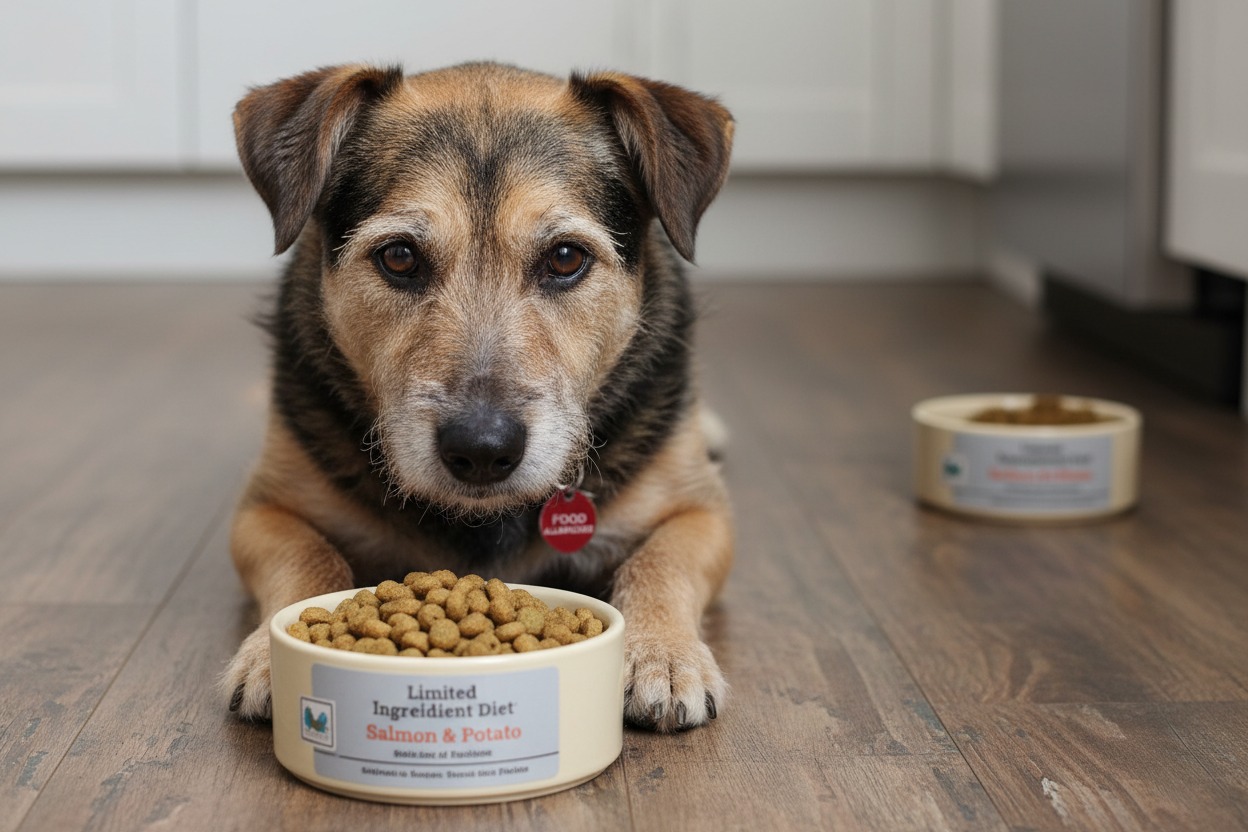
- Food Allergies: Allergies to proteins (like chicken, beef, or dairy) can cause chronic itching, recurrent ear infections, and gastrointestinal upset.
What to do: If you suspect allergies, your vet can help guide you through elimination diets, allergy testing, or specialized medications to block the itch cycle.
Bacterial and Yeast Infections
Skin infections are very rarely primary issues. Instead, they are usually “secondary infections” that happen because the skin barrier was already compromised by allergies, moisture, or excessive scratching.
- Hot Spots (Pyotraumatic Dermatitis): Common in dogs with thick coats, these red, moist, rapidly growing sores appear when a dog licks or scratches a localized area obsessively.
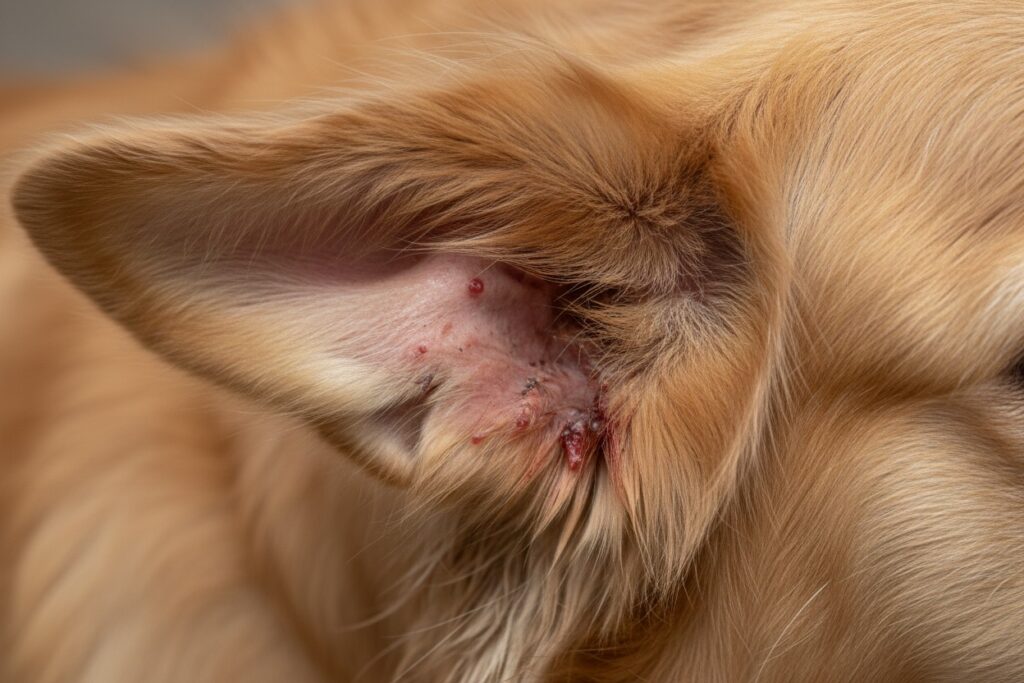
- Yeast Infections: Often found in the ears and between the toes, yeast infections cause redness, a musty odor, and thick, dark skin discoloration.
What to do: These infections generally require veterinary treatment, which may include medicated shampoos, topical sprays, or oral antibiotics and antifungals.
Ringworm
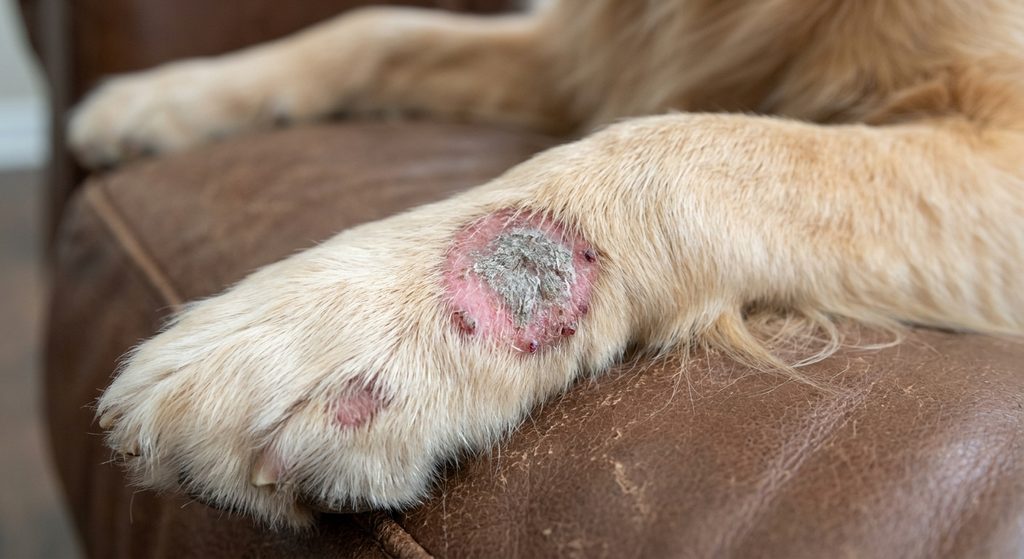
Despite its name, ringworm isn’t a worm at all—it’s a highly contagious fungal infection. It typically appears as circular, crusty patches of hair loss, often on a cat’s ears, face, or paws, or a dog’s body.
Important Note: Ringworm is zoonotic, meaning it can be easily transmitted from pets to humans. If you suspect ringworm, wear gloves when handling your pet and consult your vet immediately.
5. Stress and Behavioral Licking (Psychogenic Alopecia)
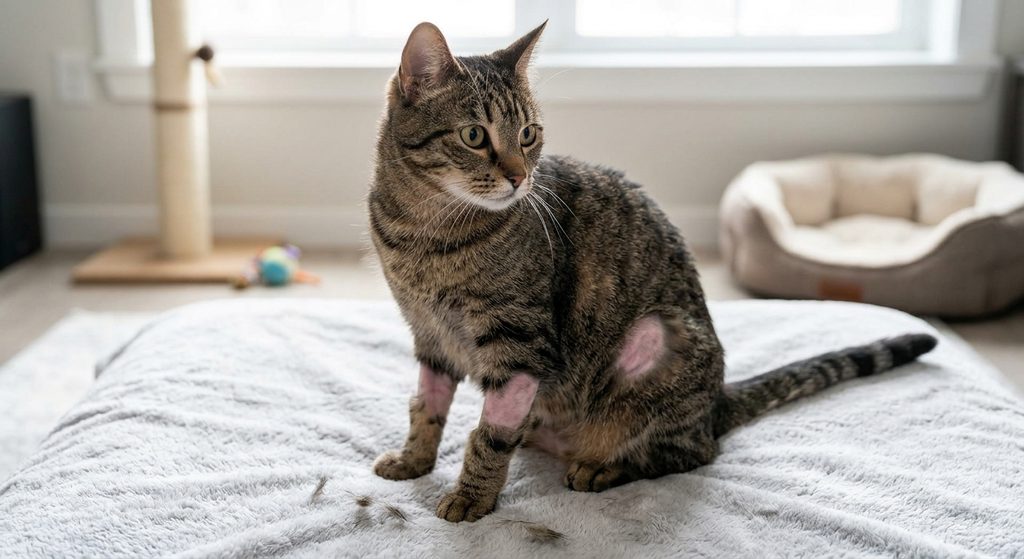
Cats, in particular, are sensitive creatures. When they experience stress, boredom, or anxiety, they may soothe themselves by excessive grooming. Over time, this leads to bald, smooth patches on their belly, legs, or flanks, even though no parasites or infections are present.
What to do: If medical causes are ruled out, you’ll need to address the root cause of the anxiety through environmental enrichment, interactive play, or calming pheromones.
When to See the Vet
While a single scratch isn’t a cause for panic, you should schedule a veterinary visit if you notice:
- Persistent scratching, licking, or biting
- Red, inflamed, or bleeding skin
- Hair loss or bald patches
- Scabs, flaking, or bumps
- An unpleasant odor coming from the skin or ears
Your veterinarian can perform skin scrapings, cytology, or blood tests to pinpoint the exact cause of your pet’s discomfort. With the right diagnosis and treatment plan, you can help your furry friend ditch the itch and get back to living their happiest, healthiest life!