

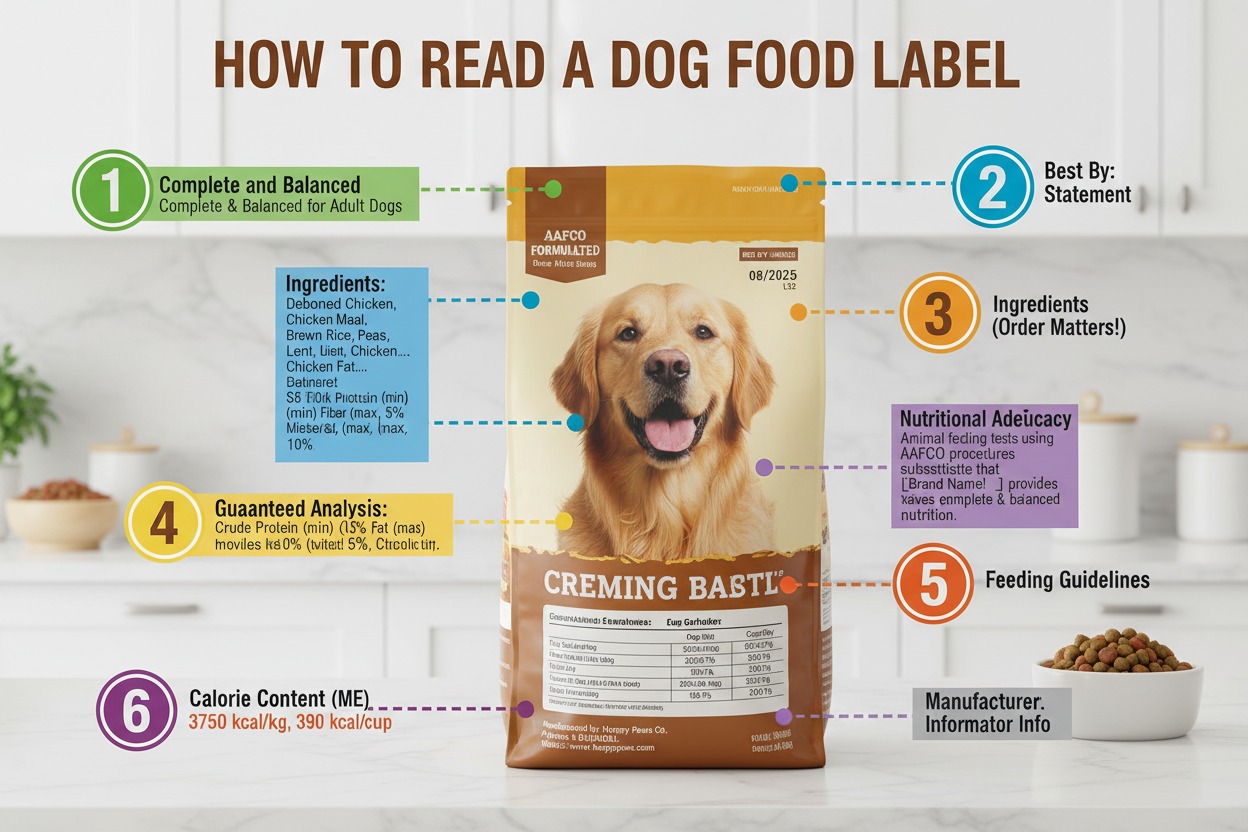
Choosing the right food for your dog can feel overwhelming with all the marketing claims on the front of the bag. However, the most important information is actually found on the back or side panel. Here is a step-by-step guide to decoding a dog food label so you can make the best nutritional choice for your pet.
1. Check the Product Name (The “95%, 25%, or With” Rule)
The name of the food is heavily regulated by AAFCO (Association of American Feed Control Officials) and tells you a lot about the primary ingredients:
- “Beef Dog Food” or “Chicken Recipe”: The named ingredient must make up at least 95% of the total product (or 70% if water is removed for processing).
- “Beef Dinner,” “Chicken Entrée,” or “Beef Platter”: The named ingredient must make up at least 25% of the product (excluding water). If multiple ingredients are listed (e.g., “Chicken and Rice Dinner”), they together must equal 25%, with the first ingredient present in a higher amount than the second.
- “With Beef” or “With Chicken”: The named ingredient only needs to make up at least 3% of the product.
- “Beef Flavor”: The food only needs to contain enough of the ingredient to impart a detectable flavor. Real beef may barely be present, or artificial flavoring may be used.
2. Review the Ingredient List
Ingredients are listed in descending order by weight, before they are cooked. This means heavy, water-rich ingredients (like fresh chicken or whole potatoes) appear near the top, while lighter, dry ingredients appear further down.
- Look for Named Proteins: High-quality foods generally list a specific animal protein (e.g., “deboned chicken,” “lamb,” or “salmon”) as the first ingredient, rather than vague terms like “meat meal” or “animal by-products” (though quality meat meals are actually concentrated protein sources).
- Watch for “Ingredient Splitting”: Manufacturers sometimes split similar ingredients (like different types of corn or wheat flour) into multiple categories so they appear lower down the list, keeping a meat protein at the very top. Look at the top five ingredients to get a true sense of the food’s base.
3. Find the AAFCO Statement
The nutritional adequacy statement is your proof that the food is a complete and balanced meal. Look for phrasing like:
- “Animal Feeding Tests”: This is the gold standard. It means the food has been tested in real-feeding trials and proven to provide adequate nutrition.
- “Formulated to Meet AAFCO Standards”: This means the food was created in a lab to meet nutrient profiles, but hasn’t necessarily been tested on live animals.
- Also check life stage suitability: Is it formulated for “all life stages” (often suitable for puppies and adults), “growth and reproduction,” or “adult maintenance”?
4. Read the Guaranteed Analysis
This section guarantees the minimum and maximum percentages of four key nutritional components:
- Crude Protein (Minimum): The percentage of protein in the food.
- Crude Fat (Minimum): The percentage of fat, which provides energy and supports skin and coat health.
- Crude Fiber (Maximum): The maximum amount of dietary fiber, which aids digestion.
- Moisture (Maximum): The maximum water content. Dry kibble is usually around 10% moisture, while canned wet food can be up to 78%. Note: You cannot directly compare the nutrients of dry food to wet food without converting them to a “dry matter basis” due to the difference in moisture.
5. Understand the Feeding Guidelines
The feeding chart provides a starting recommendation for how much to feed your dog based on their weight and activity level. Keep in mind that these are just estimates. Every dog has a unique metabolism, so monitor your dog’s body condition and adjust the portion size up or down to maintain an ideal weight.
Summary Checklist
When evaluating a new dog food label, always ask yourself:
- Is a quality animal protein listed first?
- Is there an AAFCO statement guaranteeing complete and balanced nutrition for my dog’s specific life stage?
- Does the guaranteed analysis match my dog’s specific health and energy needs?
Leave a Reply