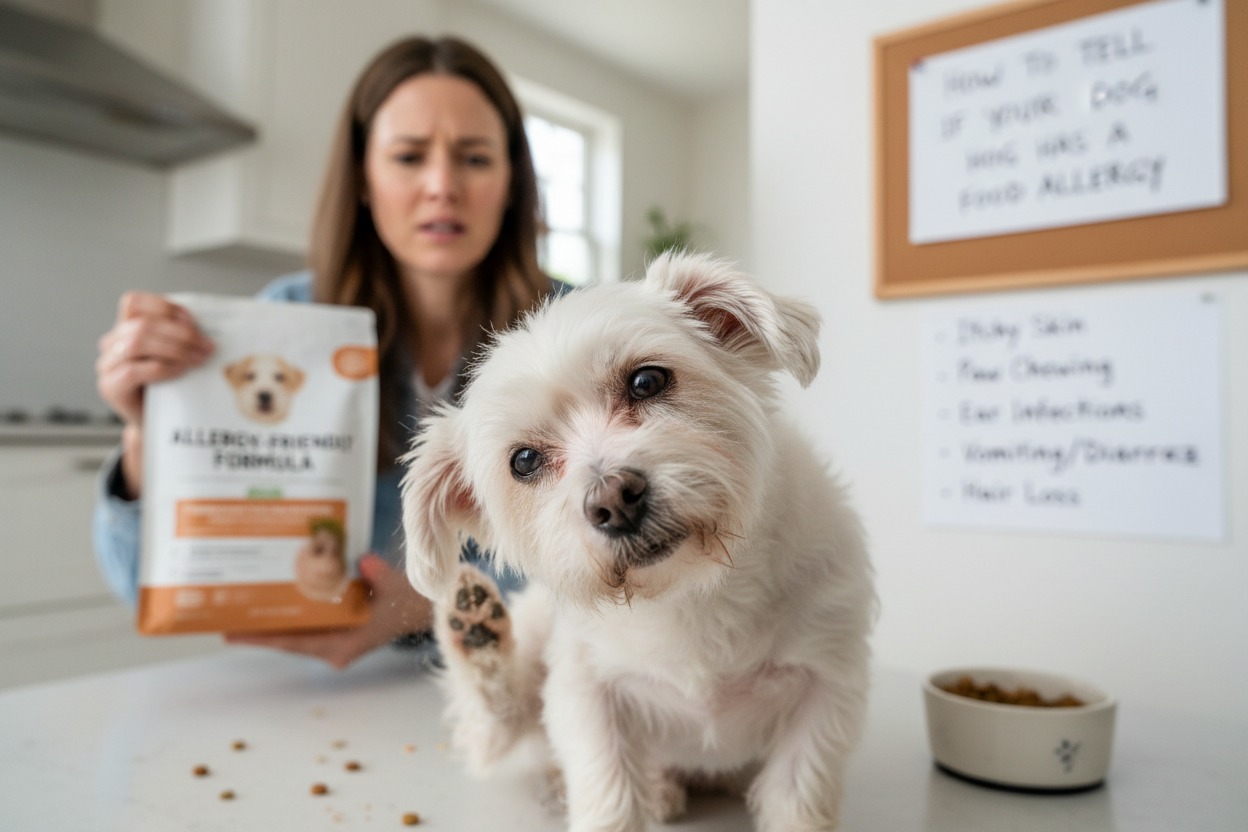
Food allergies in dogs can be challenging to identify because their symptoms often mimic other health issues. Recognizing the signs early can help you provide relief to your furry friend and improve their quality of life. Here’s how you can tell if your dog has a food allergy.
- Observe Skin Irritations
One of the most common signs of a food allergy in dogs is skin problems. Look for redness, itching, swelling, or rashes, especially around the paws, ears, face, and belly. Frequent scratching, licking, or biting at the skin may indicate discomfort caused by an allergic reaction. - Monitor Digestive Issues
Food allergies can affect your dog’s digestive system. Symptoms include vomiting, diarrhea, or chronic gas and bloating. If your dog frequently experiences stomach upset after meals, it might be linked to a food allergy. - Check for Ear Infections
Recurrent ear infections can be a sign of a food allergy. If your dog’s ears are red, inflamed, or have an unusual odor, and these issues keep returning despite treatment, food allergies could be the underlying cause. - Notice Changes in Behavior
Dogs in discomfort may become irritable, restless, or lethargic. If your dog’s behavior changes alongside physical symptoms, it’s worth considering food allergies as a possibility. - Conduct an Elimination Diet Trial
The most effective way to diagnose a food allergy is through an elimination diet. This involves feeding your dog a novel protein and carbohydrate source they haven’t eaten before for several weeks. If symptoms improve and then return when the original food is reintroduced, a food allergy is likely. - Consult Your Veterinarian
Always seek professional advice if you suspect your dog has a food allergy. Your vet can help rule out other conditions, recommend appropriate tests, and guide you through dietary changes safely.
In summary, paying close attention to your dog’s skin condition, digestive health, ear health, and behavior can provide clues about food allergies. Early detection and management can make a significant difference in your dog’s comfort and well-being.
Leave a Reply