
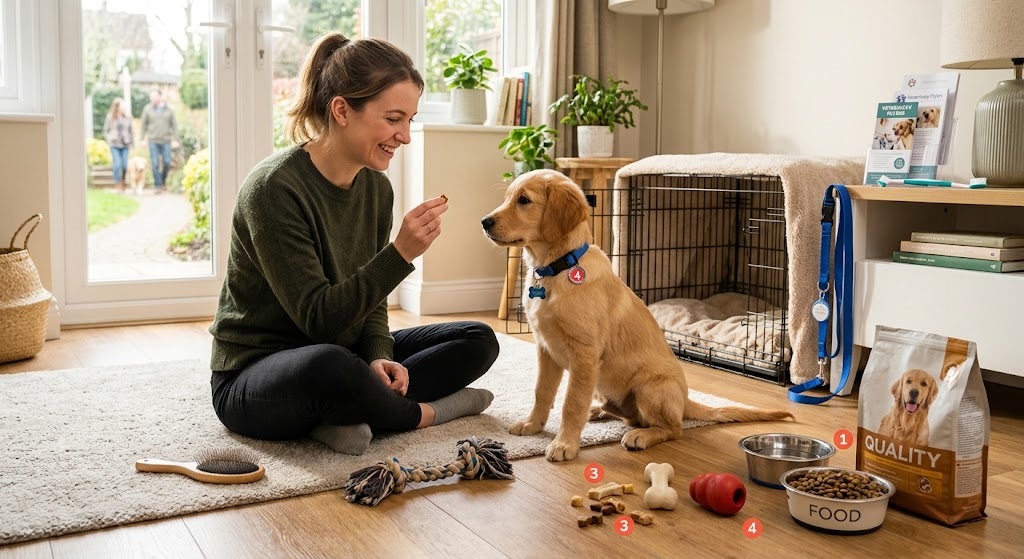
Bringing a dog home is an exciting milestone, but it also comes with a lot of responsibility. Whether you just adopted a playful puppy or an easygoing adult rescue, knowing the basics of canine care is the key to a happy, healthy life together. Here is a straightforward guide to help beginner dog owners navigate their first few months.
1. Nutrition: Feed for Health
Proper nutrition forms the foundation of your dog’s well-being.
- Choose Quality Food: Select a commercial dog food appropriate for your dog’s age (puppy, adult, senior), size, and activity level. Look for products where meat is the first ingredient.
- Establish a Schedule: Feed adult dogs twice a day (morning and evening). Puppies will need three to four meals a day. Stick to a consistent schedule to help with digestion and house training.
- Mind the Treats: Treats are great for training, but they should make up no more than 10% of your dog’s daily caloric intake to prevent obesity.
- Fresh Water: Keep a bowl of clean, fresh water accessible to your dog 24/7.
2. Healthcare and Veterinary Care
Preventative care saves lives and keeps vet bills manageable.
- Find a Vet: Establish a relationship with a local veterinarian within your first week of dog ownership. Schedule an initial wellness check-up.
- Vaccinations and Parasite Control: Ensure your dog is up to date on core vaccines (rabies, DHPP) and protected against fleas, ticks, and heartworms.
- Spaying/Neutering: If your dog isn’t already altered, discuss the best timing for the procedure with your veterinarian.
- Microchipping: Make sure your dog wears a collar with ID tags and is microchipped with your current contact information in case they ever get lost.
3. Training and Socialization
A well-behaved dog is a confident and welcome member of the community.
- Positive Reinforcement: Use treats, praise, and play to reward good behavior. Never use physical punishment, as it only creates fear and aggression.
- Basic Commands: Teach essential commands like “sit,” “stay,” “come,” and “leave it” early on. Keep training sessions short (5–10 minutes) and fun.
- Socialization: Expose your dog gently to new people, animals, sounds, and environments. This helps prevent fear-based behaviors as they grow.
- Crate Training: A crate can become a safe, cozy den for your dog and a useful tool for house training. Never use the crate as a place of punishment.
4. Exercise and Mental Stimulation
A tired dog is a good dog. Physical and mental exercise prevent boredom and destructive behaviors like chewing furniture.
- Daily Walks: Most dogs need at least one or two walks a day. High-energy breeds (like Border Collies or Huskies) will need significantly more vigorous exercise, such as running or playing fetch.
- Brain Games: Challenge your dog’s mind with puzzle toys, snuffle mats, and obedience training. Scent work and interactive games tire out a dog just as much as physical running.
5. Grooming and Hygiene
Regular grooming keeps your dog’s skin, coat, and teeth healthy.
- Brushing: Brush your dog’s coat regularly to remove loose fur, prevent mats, and distribute natural oils. The frequency depends on their breed and coat type.
- Dental Care: Brush your dog’s teeth regularly with dog-safe toothpaste to prevent periodontal disease and bad breath.
- Nail Trimming: Trim their nails every few weeks. If you hear clicking on the floor, they are too long.
- Bath Time: Bathe your dog only as needed—usually every month or two, unless they roll in something muddy! Over-bathing can dry out their skin.
6. Love, Patience, and Bonding
Above all, remember that your dog is adjusting to a brand-new world. Give them the “3-3-3 Rule” for rescue dogs: 3 days to decompress, 3 weeks to learn the routine, and 3 months to feel completely at home. Show patience, offer plenty of affection, and enjoy the incredible journey of building a lifelong bond with your new best friend.
Leave a Reply